 Neat
Neat
 Crestron
Agile office design
Design principles that support agility and flexibility in modern office spaces, with mixed settings for focus, collaboration, and social work.
Explore the key terms shaping hybrid workplaces and modern employee experience.
No results found.
Design principles that support agility and flexibility in modern office spaces, with mixed settings for focus, collaboration, and social work.
A way of working that emphasizes adaptability, collaboration, and efficient workflows across locations and schedules.
Insights that help administrators optimize space usage, monitor attendance, and adjust office layouts based on real activity.
Learn moreDesks or parking spaces permanently allocated to specific employees or teams, rather than shared on demand.
Learn moreMeasuring who is in the office — often via desk bookings, QR check-ins, or sensors — to inform workplace decisions.
Learn moreA wall- or door-mounted display that shows room or desk availability and lets people book on the spot.
Learn moreA QR or NFC sticker placed on a desk or room so employees can book or check in quickly from a phone.
Learn moreAutomatic synchronization of desk and room bookings with employee calendars such as Google Calendar or Outlook to prevent double bookings.
Learn moreConfirming arrival for a booking so unused reservations can be released and utilization data stays accurate.
A structured approach to aligning in-office and remote days so teams, rooms, and desks are available when collaboration matters most.
A system that lets employees reserve workspaces in advance, optimizing shared seating in hybrid workplaces.
Learn moreWorkspace software where multiple employees use the same desk at different times, improving space efficiency and collaboration.
Learn moreScreens that display live office information — room status, announcements, wayfinding, and availability — across the workplace.
Learn moreReal-time or near-real-time reallocation of office space based on attendance patterns and utilization data.
Low-power electronic paper displays used for desk or room labels that stay readable and update booking status wirelessly.
Learn moreTools for planning and running workplace events, meetings, and conferences with spaces, visitors, and services coordinated in one place.
Learn morePlatforms and practices that improve every touchpoint employees have with the office — booking, arriving, finding, and fixing issues.
Operating and maintaining workplace buildings, spaces, and services so the office stays safe, efficient, and ready for people.
Learn moreA permanently assigned workstation for an employee or team, often managed alongside shared desks in the same system.
Learn moreAn office setup that offers choice of location, time, and space type — desks, rooms, focus areas — based on the work at hand.
A visual map of office layouts used to find spaces, book desks or rooms, and understand how floors are organized.
Learn moreAdherence to European data protection regulations that govern how workplace platforms collect, store, and process personal data.
Learn moreDevices that bring the digital workplace into the physical office — booking panels, e-paper labels, sensors, kiosks, and more.
Learn moreA shared seating model where employees book or claim available desks instead of having a permanently assigned seat.
Learn moreA work model that combines remote and in-office days, supported by booking, attendance, and collaboration tools.
A digital map that lets employees and admins view layouts, book spaces, and navigate the office visually.
Learn moreInternet of Things devices in the office — such as occupancy sensors — that streamline operations and feed utilization data.
Learn moreA locked-down tablet or panel experience for lobby or room booking, check-in, and wayfinding without a full desktop interface.
Learn moreReserving conference and meeting rooms in advance or on demand, often synced with calendars and room displays.
Learn moreBooking desks, rooms, parking, and services from a smartphone or tablet app while on the go.
Learn moreDetermining the right number of people, desks, and activities for a workspace to balance comfort, collaboration, and cost.
Learn moreTrends and patterns of who comes into the office, used to guide hybrid policies and real-estate decisions.
Learn moreAllocating and booking parking spaces across locations so hybrid workers can secure a spot when they commute in.
Learn moreA workspace that minimizes physical documents in favor of digital records, reducing waste and improving accessibility.
Booking or checking into available desks and rooms by scanning a QR code on site.
Learn moreCoordinating shared workplace assets — desks, rooms, equipment, parking, and services — so demand and supply stay aligned.
Policies and programs that bring employees back into physical offices after periods of remote or hybrid work.
Software and displays that make meeting room reservations simple for employees and transparent for workplace teams.
Learn moreOn-demand workplace services — catering, equipment, cleaning requests — requested and fulfilled through a central platform.
Learn moreA workplace where software, hardware, and data work together to automate booking, access, signage, and space insight.
Learn moreHow effectively floors, zones, desks, and rooms are used over time — a core metric for hybrid real-estate planning.
Learn moreCentralizing facility requests and issue reports so workplace problems are tracked, assigned, and resolved efficiently.
Learn moreVisitor or employee arrival flows that use QR codes, mobile passes, or self-service kiosks instead of shared paper logs.
Learn moreAutomatically creating and updating user accounts in workplace systems through directory sync, SCIM, or CSV uploads.
The percentage of available workspace capacity that is actually used — key for rightsizing offices and neighborhoods.
Learn moreDigital tools and spaces that let hybrid teams collaborate, communicate, and access workplace resources from anywhere.
Secure, compliant processes for registering guests, issuing badges, notifying hosts, and logging visits at scale.
Learn moreDigital maps and directions that help people find desks, meeting rooms, amenities, and exits in complex offices.
Learn moreScheduling in-office versus remote days, viewing colleagues’ plans, and coordinating team attendance across the week.
Tools and insights for understanding workspace usage, employee attendance patterns, and opportunities to improve the office.
Learn moreGiving employees choice over where, when, and how they work while still supporting collaboration and space efficiency.
Sensors that detect occupancy, environmental conditions, or equipment status to automate operations and inform planning.
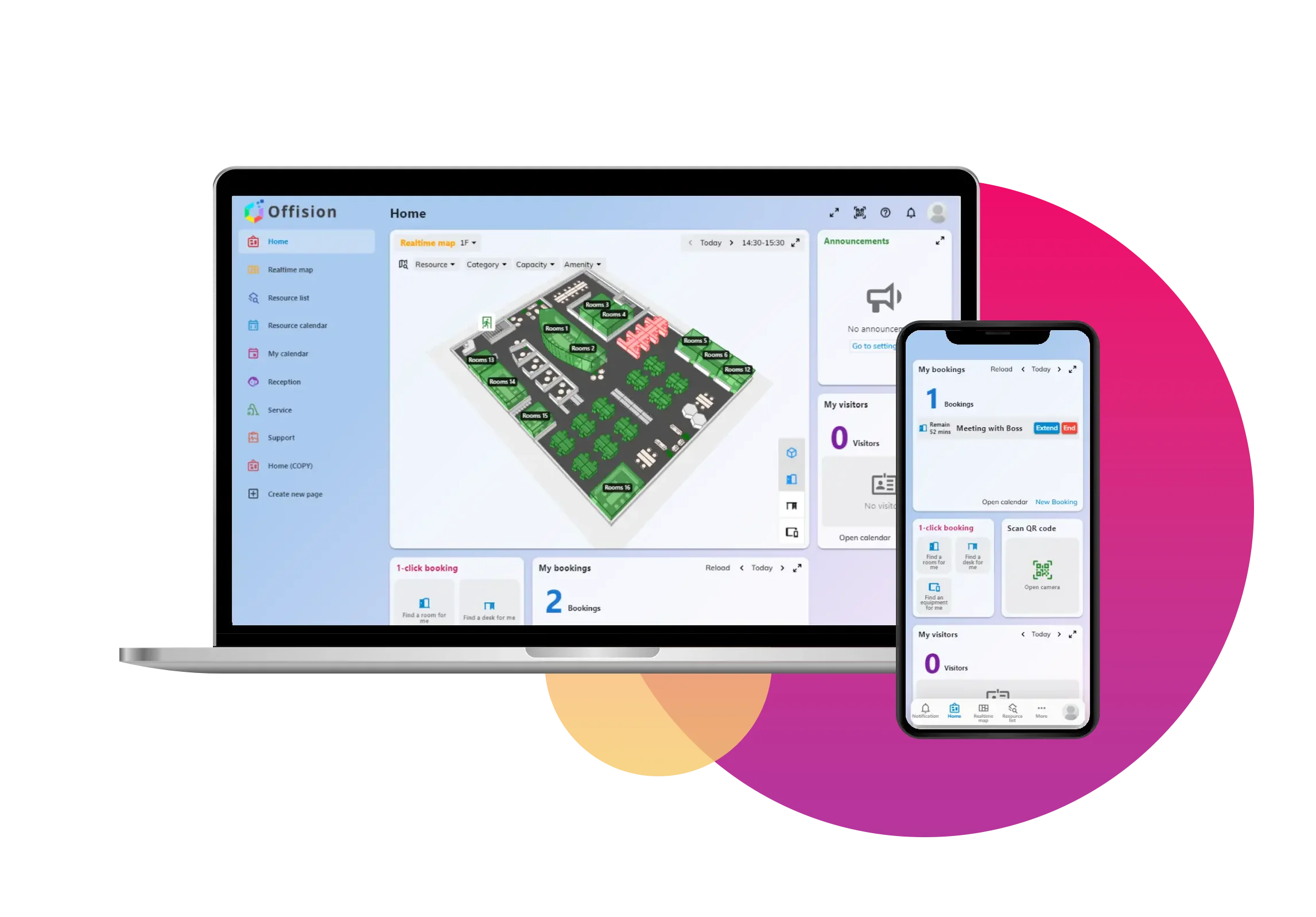
Learn moreSee how Offision helps teams book desks and rooms, welcome visitors, and understand space utilization — all in one platform.

©2026 ONES Software Ltd. All rights reserved.