 Neat
Neat
 Crestron
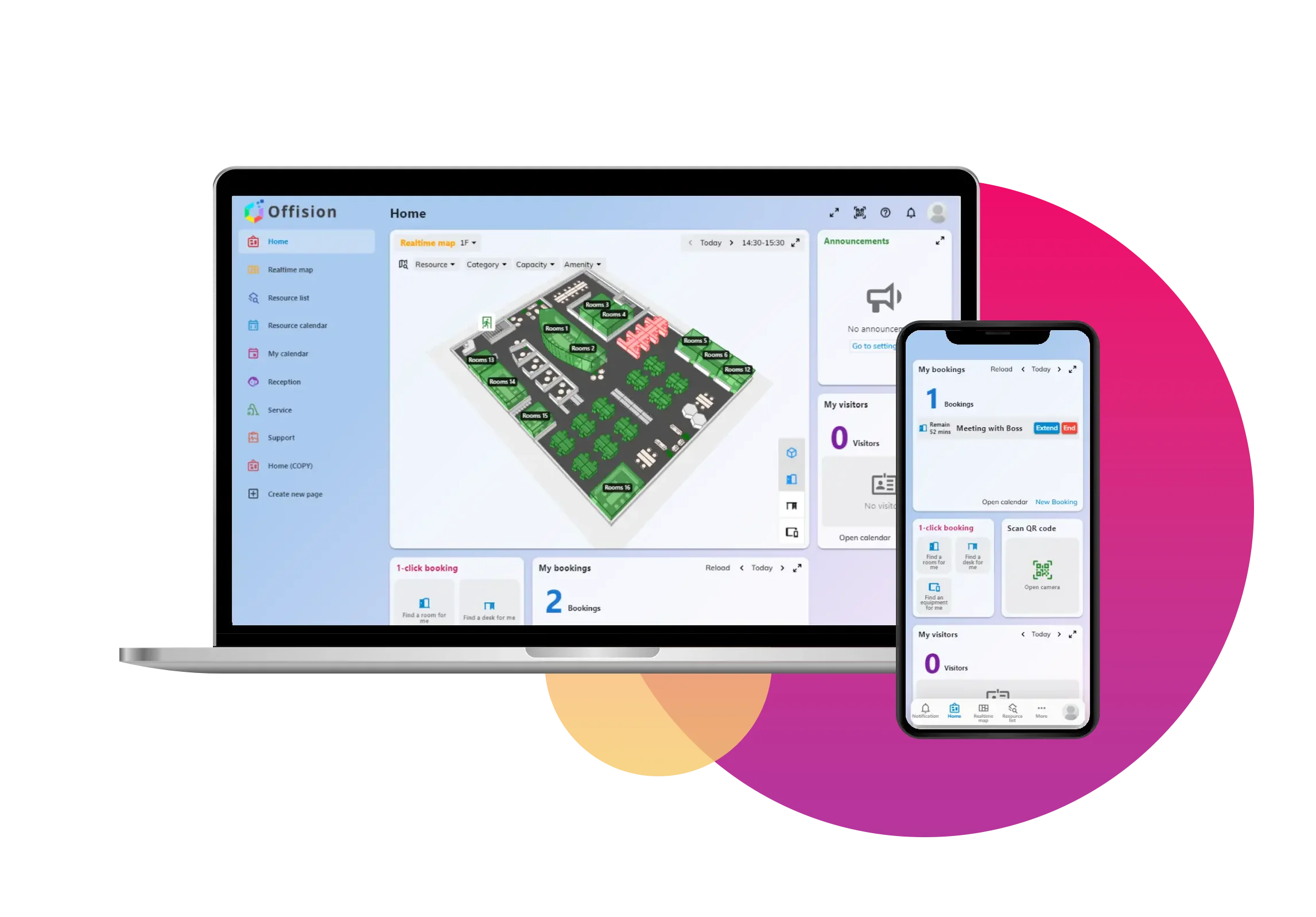
Everyone books on the hour
Hour-long defaults pile demand into the same slots.
Offision shows peak demand by room, floor and hour.
How to read peak-hour utilizationProblems you recognise Rooms and desks
Demand is not spread evenly across the day, and your booking tool is probably not helping people find the alternatives that already exist.
Content reviewed: September 2026
Hour-long defaults pile demand into the same slots.
Offision shows peak demand by room, floor and hour.
How to read peak-hour utilizationEveryone books the same three rooms by name.
Offision maps free rooms nearby on the floor.
How the floor map spreads bookingsIf finding space takes clicks, people book far ahead.
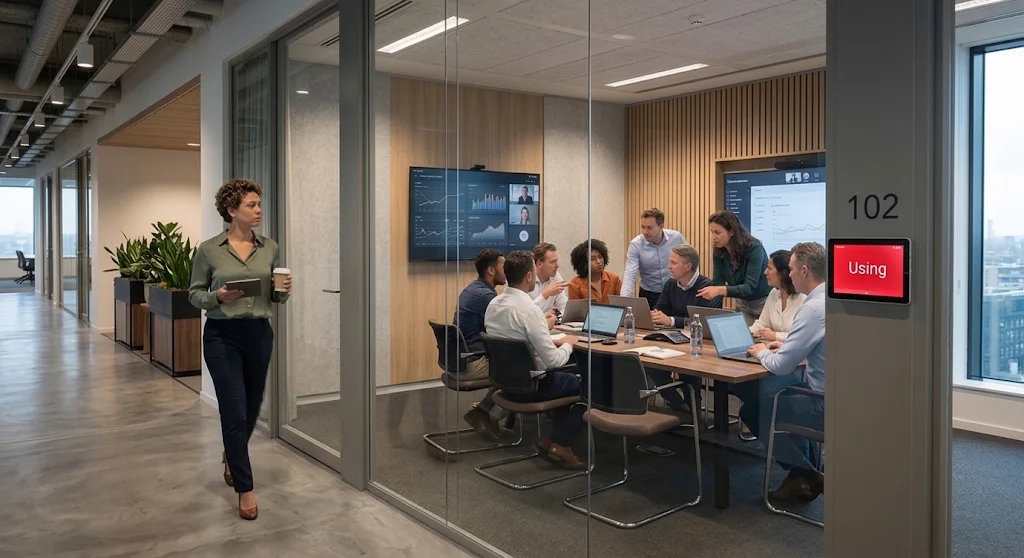
Live availability in the app and on the panel.
How live search and panels show free roomsTwo people take a twelve-seat boardroom.
Offision matches room size to the meeting.
How resource policies match size to meetingsThe same problem costs each group something different — and they rarely compare notes.
They plan around room scarcity instead of around the work, and hold bookings defensively because finding space later feels unlikely.
They hear "we need more rooms" without data on whether the rooms they have are being found and matched properly.
They own a booking tool that gets blamed for a shortage it can actually help reveal and relieve.
Sometimes it is. The point is to know which before you spend on space: utilization by room, hour and size tells you whether you are short of rooms or short of visibility.
Availability shown in place answers "what is free near me" in one look, instead of asking people to try room names one at a time.
Yes. A room panel can take a walk-up booking on the spot, so the empty room in front of someone becomes bookable immediately.
Walk through your estate, your booking rules and your calendar setup with our team — or start free and try it on one floor.


©2026 ONES Software Ltd. All rights reserved.